The best evenings seem to assemble themselves. They never do. What separates a dinner you attend from one you remember is almost entirely invisible - and that is the point.
There is a particular kind of evening that seems to assemble itself. The candles are lit before anyone arrives. The first drink finds your hand without your asking for it. The host is somewhere in the room, unhurried, and the food appears at the exact moment the conversation needs a pause. Nothing about it feels arranged - which is precisely the tell. Ease like that is built, course by course, long before the doorbell rings.
- The room
- Eight to twelve - small enough for one conversation
- The light
- Low and warm; candles over anything overhead
- The pace
- Courses follow the table, not the clock
- The host's seat
- Occupied - at the table, never the kitchen
- The work
- Sourcing, cooking, cleanup - all of it hidden
- The measure
- Whether anyone thinks to offer help
The people who host this well make it look like luck. It is closer to a discipline, and almost all of it happens where the guests will never think to look.
The myth of effortlessness
Effortlessness is the most expensive thing on the table, and the only one no one can see. The flowers were chosen on a Tuesday. The playlist was settled days ago and then deliberately forgotten. The menu was built around what looked best at the market that morning, not what was promised on an invitation a week earlier. By the time the first guest steps through the door, the evening has already been rehearsed in a hundred small ways - and every trace of that rehearsal has been swept out of sight.
This is the inversion most new hosts get wrong. They believe a good evening is something you perform, brightly, in front of people. It is actually something you build quietly, beforehand, so that you can stop performing once they arrive. The goal is not to be impressive. The goal is to be free.
A good host is never the busiest person in the room. That's the whole trick - and it takes an enormous amount of work to pull off.
Sofia Rueda, private chef
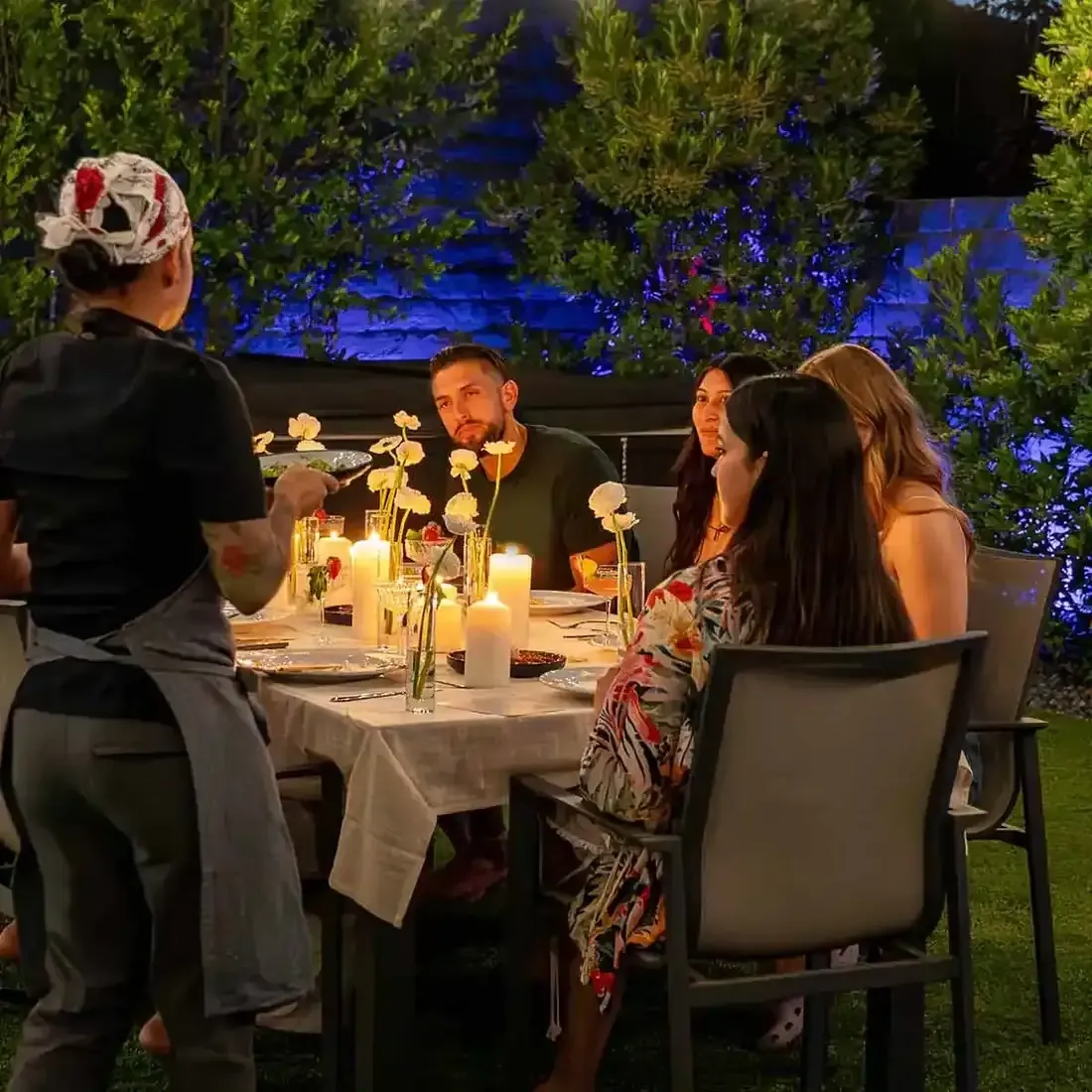
Watch someone who has hosted for years and you'll notice what they don't do. They don't disappear into the kitchen for twenty minutes between courses. They don't narrate the effort - "I was up at six for these" - or apologize for what isn't perfect. They sit down. They let the evening have its own weather. The cooking has been handed to someone whose entire job is the cooking, which is why the host can do the one thing no one else can: be present.
What the guest never sees
Behind the ease is a quiet machine. Someone decided, that morning, that the stone fruit was worth building a course around. Someone made the calls - the grower who doesn't advertise, the fishmonger who answers on the second ring. Someone did the timing math that gets ten plates to a table at once from a kitchen that was never designed for it. None of this is meant to be noticed. If you notice it, something has gone wrong.
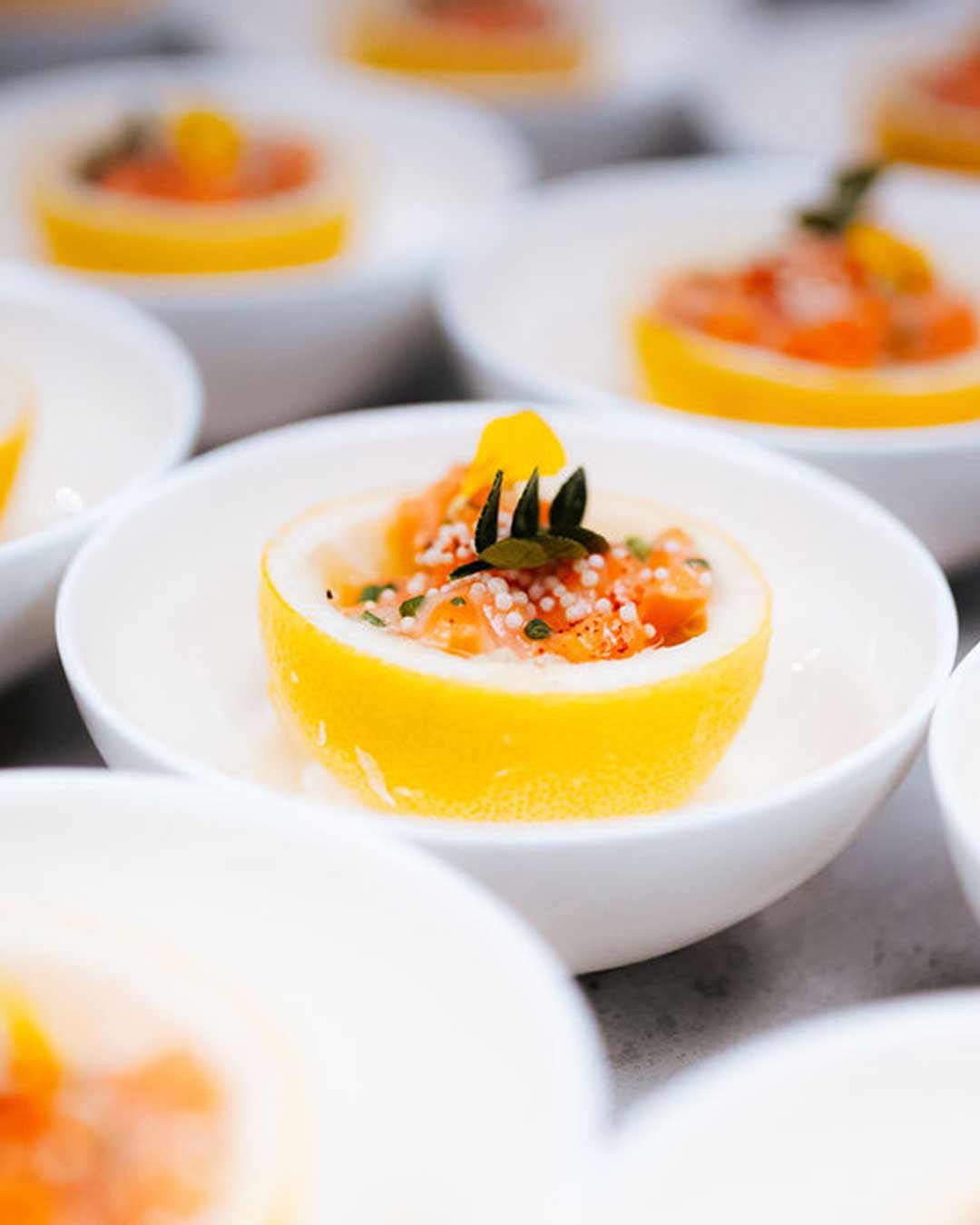
The opening bite matters more than the entree - it sets the tempo for everything that follows.
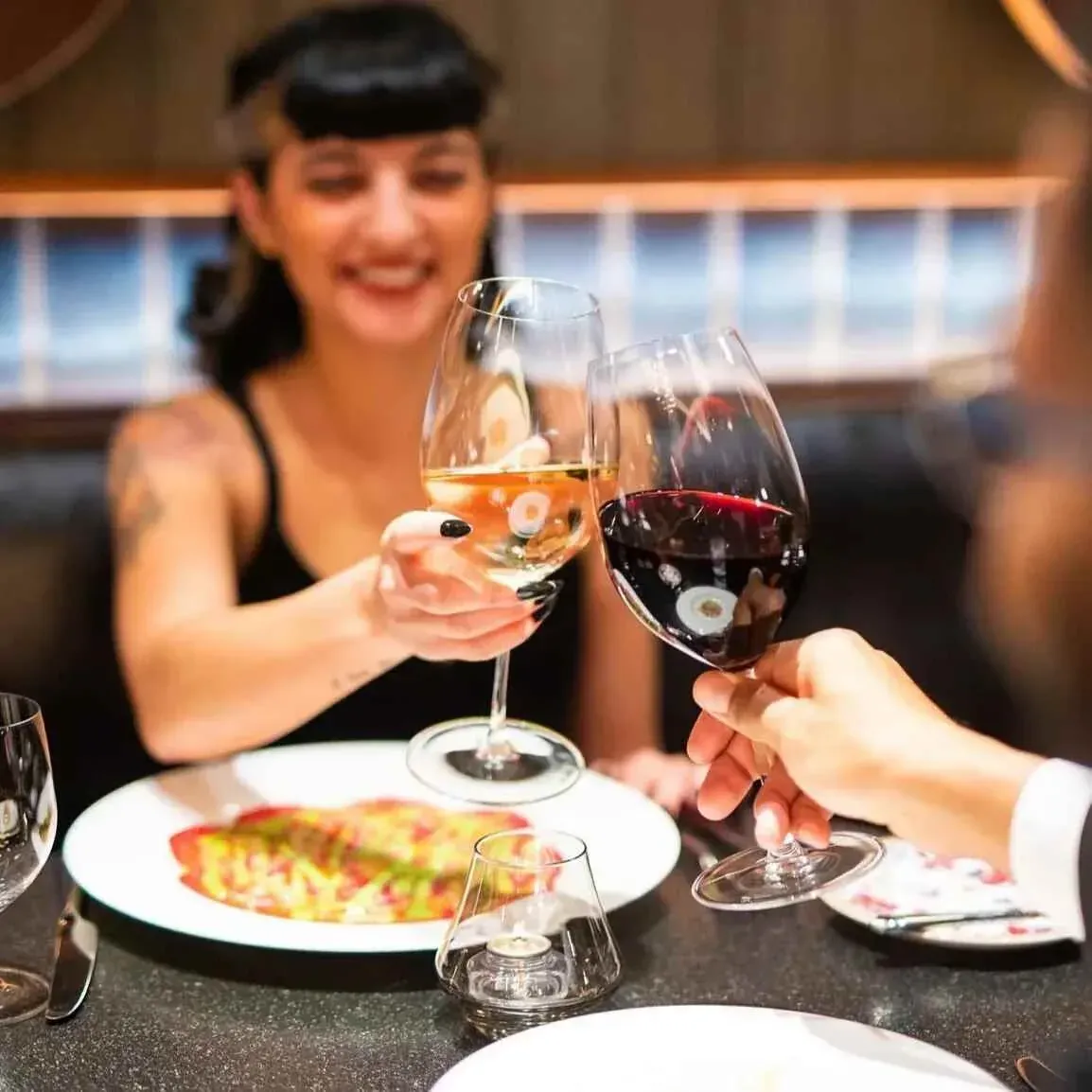
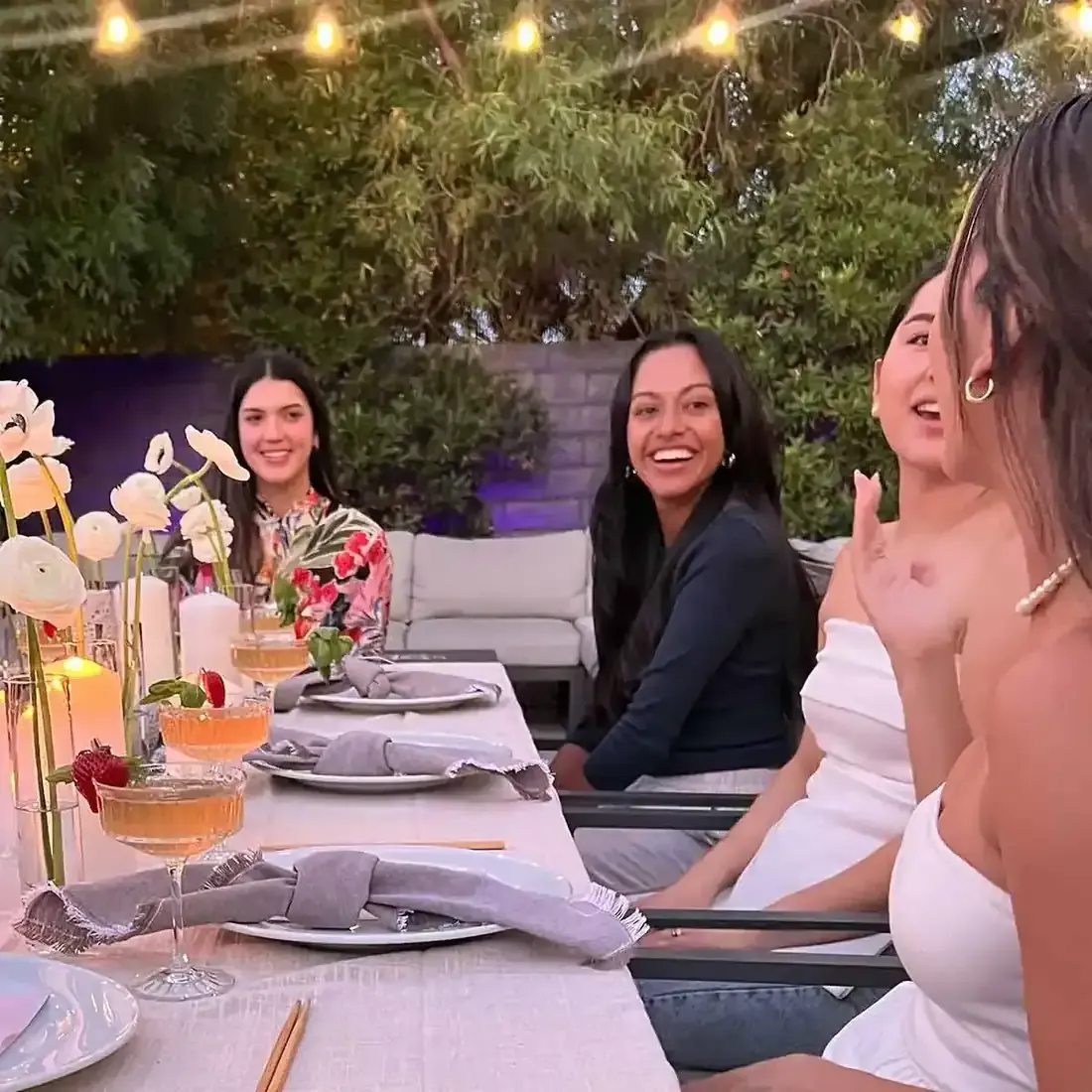
The same logic governs the table itself. Linen instead of paper. Coupes that catch the light. A pour that arrives before anyone realizes they wanted it. These are not extravagances; they are cues, and a room reads them instantly, mostly without words. The guest doesn't think "the napkins are linen." They simply feel looked after, and relax a half-step further into the evening.
People can't always name what made a night good. They just leave wanting to do it again. That feeling is the entire product.
Marco Reyes, private chef
This is also why the cleanup matters as much as the cooking. The evening that ends with the host elbow-deep in a sink, while the guests trail awkwardly toward the door, was never really finished - it was abandoned. The best nights end the way they began: with the host still at the table, in no hurry, and a kitchen that somehow returns itself to order while no one is watching.
A raw course built from a single morning's delivery - the kind of detail a table feels long before it could name it.
The host who sits down
The luxury worth buying, it turns out, is not a longer menu or a rarer bottle. It is the freedom to host your own evening as a guest in it - to be the person laughing at the far end of the table rather than the one counting plates. That freedom comes from handing the invisible machine to someone else entirely: the sourcing, the cooking, the timing, the cleanup, the worry.
This is the part Cootoh handles. A private chef arrives with the market in the back of the car, turns an ordinary kitchen into a working one for a few hours, and leaves it cleaner than they found it. The host's only job is the one that can't be delegated - to set the tone, fill the glasses they want filled, and be there for it.
You're not booking a chef. You're booking the version of the night where you get to sit down.
Claire Espinoza, Good Company
By the time the last guest lingers at the door, unwilling to be the first to leave, the work has long since dissolved into the evening it produced. No one will remember the logistics. They will remember the light, the laughing, the sense that for a few hours nothing was required of them. That is the quiet art of hosting - and like all quiet things, it is mostly made of what you never see.
About the author
Claire Espinoza writes about chefs, sourcing, and the quiet logistics of a good dinner for Good Company. She has spent more evenings than she can count standing just outside the kitchen, taking notes.